
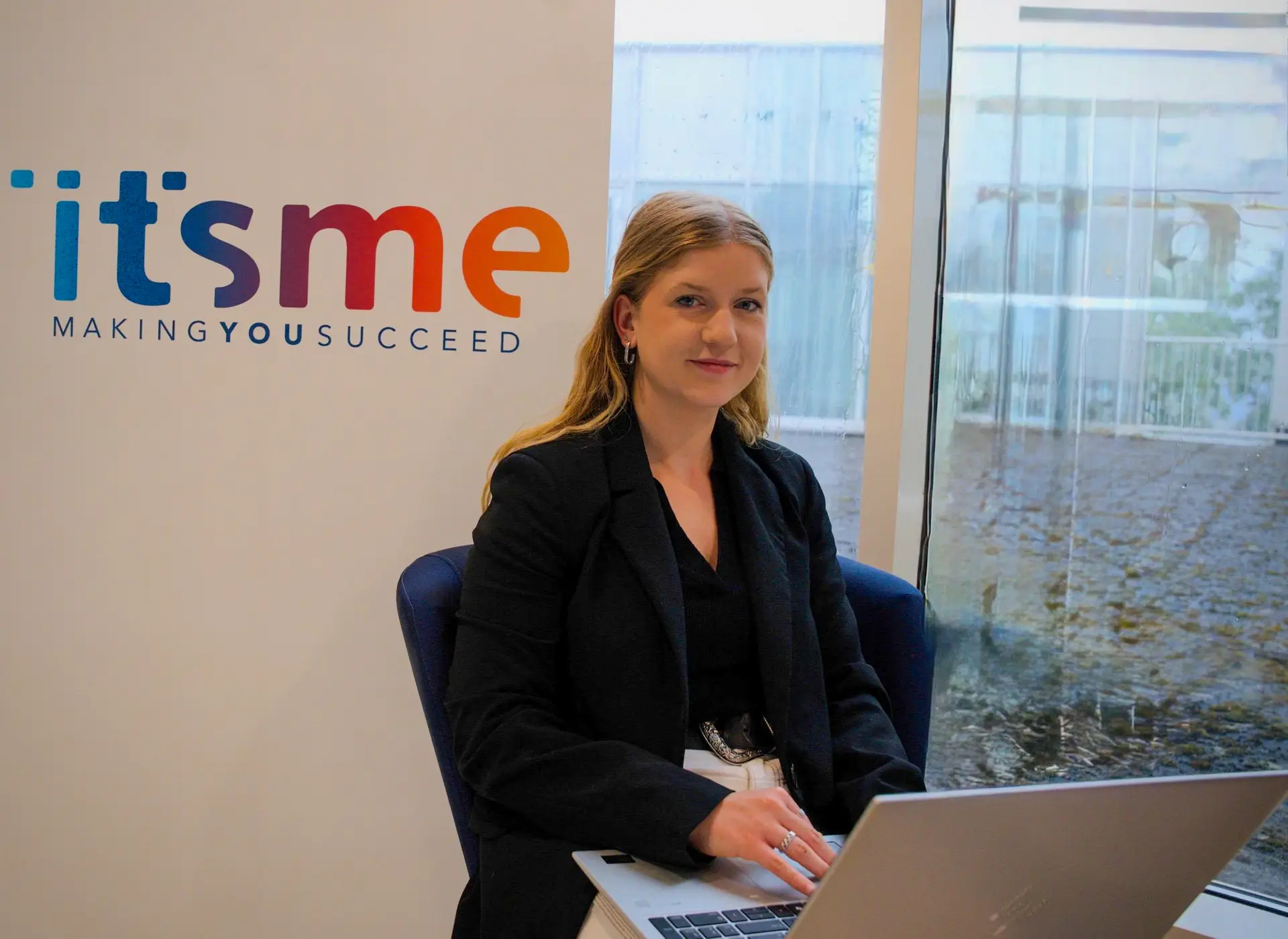
At itsme, large numbers of customer emails arrive daily at the accounts receivable department. Payment promises, copy invoice requests, complaints, messages saying an invoice “was already paid ages ago.” Everything mixed together.
Since itsme started working with CreditDevice’s automatic mail interpretation, that daily process has changed fundamentally. We spoke with Hilde, Credit Controller at itsme, about what that looks like in practice.
Hilde, what did your working day look like before the AI?
“Honestly, a large part of our day was pure reading work. Opening emails, assessing what they were, ticking the right box, logging the corresponding action. Not difficult, but enormously time-consuming. During peak periods we were always playing catch-up. Emails would sit there for days, while a customer had perhaps already made a payment promise we hadn’t recorded.”
How does it work now?
“Incoming emails are read automatically. The system determines what type of message it is and which data it contains: dates, invoice numbers, amounts. These are immediately ready as a suggestion in accounts receivable. Instead of processing an email from scratch, we now confirm a suggestion that’s already been prepared. That saves an enormous amount of time.”
That time saving has now been measured concretely. In a Lean Green Belt case study, itsme analysed the mail process from before to after implementation. Result: 32 hours per week less manual email processing. Time that now goes to files that deserve it.
Is everything the system suggests always correct?
“No, and I want to be honest about that. A customer who in the same email both has a complaint and makes a payment promise: sometimes you have to adjust manually. Very occasionally a date is misinterpreted with vague phrasing like ‘end of the month.’ But the vast majority of suggestions are simply correct. And the errors that do occur you notice almost immediately: the suggestion sits right next to the original email.”
How was it in the beginning?
“In the beginning more things went wrong, that’s true. The system had to get used to our customer base, our way of invoicing, the phrasing our customers use. We were also critical during that phase. Sometimes rightly so, sometimes because we still had to learn how to work with it. As we used it more and gave feedback, it improved. By now it’s become an enormous help.”
How did the team handle it?
“Part of the team found it genuinely difficult at first. People who had been working a certain way for years initially saw the AI as a kind of supervisor. Or they were afraid they would miss errors if they ‘blindly’ trusted the system.”
What helped: starting small. First only suggestions you confirm with one click, nothing automatic. That preserved the feeling of control. When they saw that the system rarely made major mistakes, confidence grew naturally.
“By now it’s actually the colleagues who found it daunting at the start who see the value most strongly. Nobody wants to go back to picking through everything manually.”
What has it concretely delivered?
“The turnaround time on incoming emails has dropped enormously, backlogs have virtually disappeared. The most important thing: we have time left for cases where human attention and judgement are needed. A difficult conversation with a major customer, a dispute that deserves attention, a payment arrangement that requires a tailored approach. That’s where our added value lies. And that’s where we finally have the space for it.”
What would you tell other organisations?
“Don’t be afraid that it won’t be perfect straight away. It isn’t. But it improves quickly, especially if you bring your team along in the process. Start with suggestions you confirm, build trust, and give it time. The gains you ultimately get from it are bigger than you’d think beforehand.”